|
| The San Fernando Train Depo where soldiers on the death march where shoved tightly into railroad cars for transportation (over 100 men in a car that should have held 40). |
 |
| Wayne Carringer, a survivor of the death march, told us his story as he stood in front of a memorial at Camp O'Donnell. |
 |
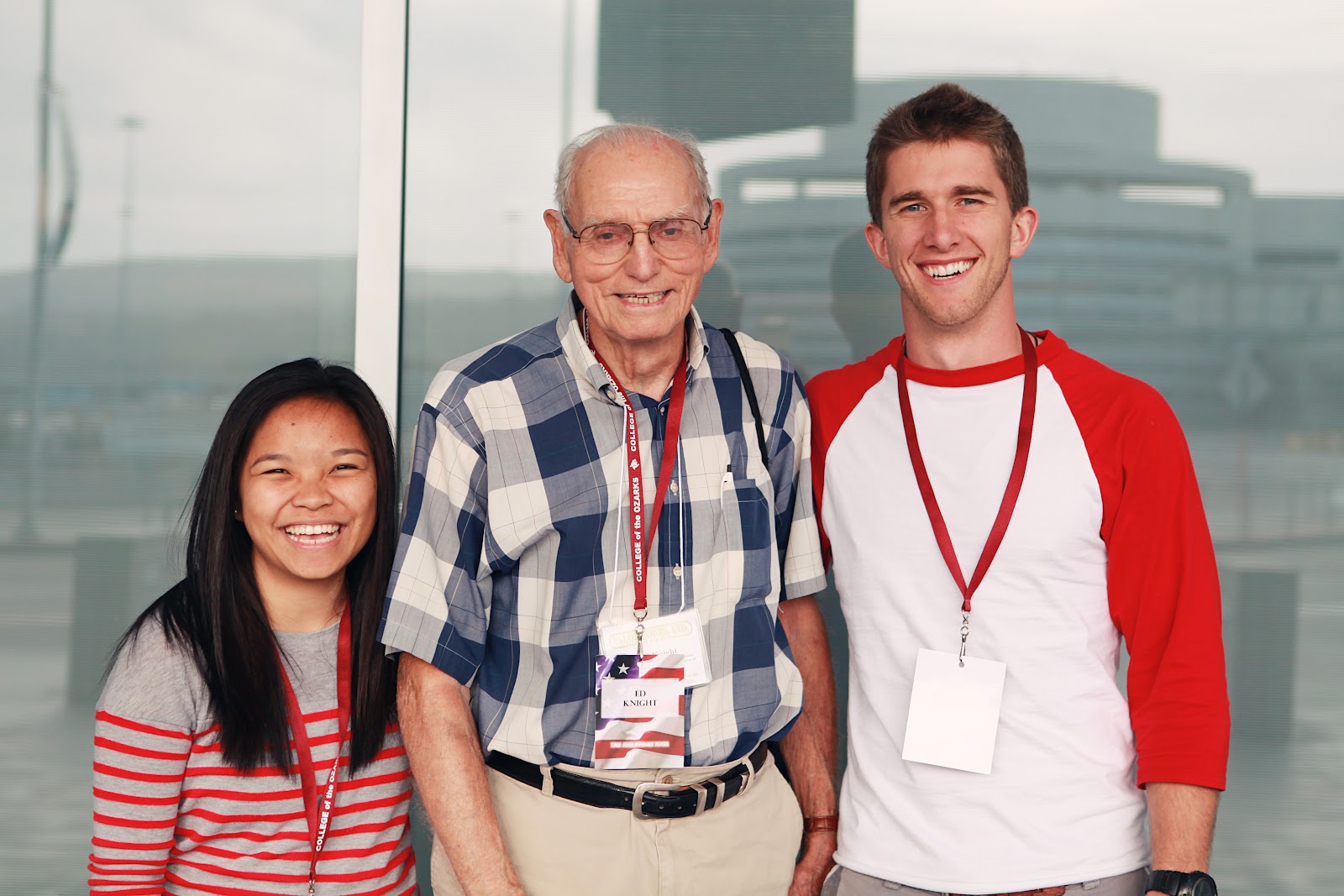
| Brandon and Sarah with their veteran Jim Collier. |
 |
| "Jorgy" stands in a restored railroad car like the one that carried him to a P.O.W. camp. |
 |
| One of the many markers that lines the path of The Bataan Death March. |
Generally, there was a restriction when loading a boxcar during WWII. It was called the 40 and 8 rule. This meant that the box car's maximum capacity was forty people or eight horses; however, we found out that this rule was never observed. We learned this at Capas Train station which marked the start of the final march to Camp O'Donnell.
Inside the station, artwork depicts the horrors of the march. Many old guns that the Japanese used during this time were on display. While looking around, our veteran, Mr. Jim Collier, turned away from a picture saying that it was too horrific to even look at. I think several men felt that way.
After our time at the train station, we continued to Camp O'Donnell where 1,600 Americans died. In tribute the the Death March, we stopped our tour and walked the final kilometer to the camp. Once we arrived, we came across an actual boxcar used for the transportation of prisoners from San Fernando to Capas. Wayne Carringer, Warren Jorgenson and Jim Collier, who all are veterans on this trip, were transported by a cart similar to this during their time here during WWII. Mr. Collier remembered being crammed into the tiny car with over 100 other men. Although he was put through this horrible experience, he was constantly telling us how other men had it worse. He said that the Death March would have been too much for him, and that he would not have survived. He experienced awful conditions, more than we can even grasp, yet he still gives the credit to his fellow servicemen.
Camp Cabanatuan, where Mr. Collier was a POW, has been one of our favorite stops because of all the stories he shared. One of our favorites was the story about the Marines' dog named Suchow. It was a mascot among the men and was never harmed in any way. However, another dog had a more fateful encounter with the prisoners. After "borrowing" the dog, the men left a note saying that because of the lack of protein, the dog has been eaten. It was wonderful to hear him laugh! Mr. Collier also told of how they would eat monkey stew. He went on to say that POWs will eat anything. We are continually blown away by the reality of his experiences. For example, when we were in the camp, we walked to where the hospital barracks once stood. While he was there, Mr. Collier had malaria and dry beriberi. The hospital was set up with 24 barracks, with Zero Ward being the last stop. Men in Zero Ward had zero chance of survival and Mr. Collier made it to barrack 12, half way to zero.
Mr. Collier has a charming sense of humor. He continuously tells us that he is so lucky to have gotten the most attractive students to be with him! Whenever we take a picture, he says he needs proof of us so that his friends back home will believe him. Overall, Mr. Collier is becoming a dear friend, and we are so honored to be accompanying him on this trip. He is such a humble man, and we are learning invaluable lessons and history from him. We have really come to love and respect this man and we are so thankful he did not make it all the way to Zero Ward.
Branden Piatt and Sarah Schrag